The Department of Materials Science at the University of Milano-Bicocca is organizing the symposium "From Designed Molecular Space to Unveiled Hidden Order: Developing the Next Generation of Smart Materials". The event is part of the seminar series “Breakthroughs in Materials Science,” which brings together lectures by internationally renowned scientists, whose recent studies have triggered a profound revolution in the field of Materials Science.
The event will feature a lecture by Prof. Susumu Kitagawa, recipient of the 2025 Nobel Prize in Chemistry, and by Prof. Nicola Spaldin, Vice President of the European Research Council (ERC).
Program
Welcome & Opening Remarks
- Prof. Marco Emilio Orlandi - Rector of the University of Milano-Bicocca
- Prof. Leo Ferraris - Vice Rector for Research
- Prof. Silvia Picozzi - Department of Materials Science
Keynote Talks
- Prof. Susumu Kitagawa (Institute for Integrated Cell-Material Sciences - Kyoto University, Premio Nobel per la Chimica 2025) - Designing Molecular Space: From MOFs to a Better Future (chair: Prof. A. Comotti)
- Prof. Nicola Spaldin (ETH Zürich, Vice President of the European Research Council, ERC) - Hunting for Hidden Order (chair: Prof. S. Picozzi)
ERC Special Session
- How the ERC Works (and How to Get a Grant) presented by Prof. Nicola Spaldin (ETH di Zurigo, Vice President of the European Research Council, ERC)
Where
Auditorium G. Martinotti - U12 Building - University of the Milano - Bicocca, via Vizzola 5, 20126 Milano
Starting time: h. 10.00 am
Streaming: http://s.unimib.it/Breakthroughs_MS
Event Flyer

Relatore: Prof. Susumu Kitagawa, Institute for Integrated Cell-Material Sciences, Kyoto University - Premio Nobel per la Chimica 2025
Abstract
Materials have traditionally been designed based on what they contain—atoms arranged in dense structures that give rise to properties such as conductivity, magnetism, and strength. In contrast, “empty space” within materials has long been overlooked. A new direction in chemistry has emerged by focusing on this missing element: molecular-scale space. Metal–organic frameworks (MOFs) are crystalline materials in which well-defined and designable nanospaces are constructed from metal ions and organic linkers.[1] This ability to precisely control internal space distinguishes MOFs from conventional materials and establishes a new paradigm in materials chemistry. Initially regarded as fragile, these porous structures are now recognized as functional platforms capable of hosting, recognizing, and controlling molecules. A further advance is the realization that these spaces can be dynamic. In soft porous crystals,[2-4] the framework responds to external stimuli such as guest molecules, pressure, or temperature. This adaptive behavior enables selective interactions, in which function emerges not only from structure but also from its ability to respond. Phenomena such as breathing and gate-opening illustrate how molecular recognition and structural flexibility work together. The design of molecular space has broad implications. In health and medicine, MOFs enable controlled drug delivery and selective sensing of biomolecules. In the environment, they provide efficient routes for carbon dioxide capture and gas separation. In energy, MOFs offer platforms for fuel gas storage and separation, contributing to safer and more efficient energy systems.[5,6] More broadly, MOFs illustrate a shift in perspective—from designing materials based on composition to designing them based on space and its function. By structuring and activating what was once considered “empty,” we can create responsive systems that address challenges in health, environment, and energy. This approach highlights how fundamental research can open new pathways toward a more sustainable future.[7]
[1] S.Kitagawa, R.Kitaura, S.Noro, Angew. Chem. Int. Ed., 2004, 43, 2334-2375. [2] S.Horike, S.Shimomura, S.Kitagawa, Nature Chem. 2009,1,695-704. [3] S.Krause, N.Hosono, S.Kitagawa, Angew. Chem. Int. Ed., 2020, 59, 15325-15341. [4] N.Behera, J.Duan, S.Kitagawa, EnergyChem, 2021, 3, 100067. [5] C.Gu, N.Hosono, J.-J.Zheng, Y.Sato, S. Kusaka, S.Sakaki, S.Kitagawa, Science, 2019, 363, 387–391. [6] Y.Su, K.Otake, J.-J.Zheng, S.Horike, Kitagawa, C.Gu, Nature, 2022, 611, 289-294. [7] S.Kitagawa, Acc.Chem.Res., 2017, 50, 514-516. Commentary (Holy Grail) [8] S.Horike, S.Kitagawa, Nature Mater.2022, 21, 983-985 (Focus Comment).
Biografia
Nobel Laureate in Chemistry (2025)
Distinguished Professor, Kyoto University Institute for Advanced Study (KUIAS) and Institute for Integrated Cell-Material Sciences (iCeMS)
Susumu Kitagawa received his Doctorate in Engineering from Kyoto University in 1979.
Working in the field of coordination chemistry, he pioneered the study of porous coordination polymers, internationally known as metal–organic frameworks (MOFs). He subsequently introduced the concept of "soft porous crystals" (SPCs), recognising flexibility in frameworks that had until then been regarded as rigid, and established innovative applications for the storage, separation and conversion of gases. In recognition of these achievements, he was awarded the Nobel Prize in Chemistry in 2025. Having characterised the twenty-first century as "the age of gas" he continues to pursue solutions to societal challenges through materials chemistry.
Selected Awards and Honours. Humboldt Research Award (2008), The Chemical Society of Japan Award (2009), Medal with Purple Ribbon (2011), Leo Esaki Prize (2013), Japan Academy Prize (2016), Fujihara Award (2017), Chemistry for the Future Solvay Prize (2017), Member of the Japan Academy (2019), Foreign Member of the Royal Society, UK (2023), Foreign Member of the Korean Academy of science and Technology. Person of Cultural Merit and Order of Culture (2025), Nobel Prize in Chemistry (2025).
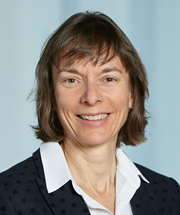
Relatore: Prof. Nicola Spaldin, ETH Zürich, Vice President of the European Research Council (ERC)
Abstract
Most magnetic materials, phenomena and devices are well described in terms of the magnetic dipoles arising from the spin of their constituent electrons. There is mounting evidence, however, of intriguing magnetic behaviors that can't be explained in terms of electron spin dipole moments; these behaviors are often attributed to "hidden order" since
their origin is difficult to decipher with conventional experimental probes. I will show how computer simulations can help us to hunt for hidden magnetic order and to explain or predict weird magnetic properties in materials, and describe some examples that combine fascinating basic physics with possible technological relevance.
Biografia
Nicola Spaldin is the Professor of Materials Theory at ETH Zurich. She is best known for her contributions to the development of the class of materials known as multiferroics, which combine simultaneous ferromagnetism and ferroelectricity. She is a passionate science educator, coordinator of her department’s curriculum revision "The Materials Scientist 2030, Who is She?", and holder of the ETH Golden Owl Award for excellence in teaching. When not trying to design new materials with weird properties, she can be found playing her clarinet, or skiing or climbing in the Alps.