Il Dipartimento di Scienza dei Materiali nell'ambito dell'iniziativa Breakthroughs in Materials Science organizza il simposio "The MOF Revolution: Shaping Materials for the Future of the Planet" che vede la partecipazione del Prof. Omar Yaghi, Premio Nobel per la Chimica 2025.
Programma
Saluti istituzionali
- Prof. Marco Emilio Orlandi - Rettore dell'Università di Milano - Bicocca
- Prof. Giuseppe Gorini - Prorettore allo Sviluppo internazionale e collaborazione accademica
Seminari
- Prof. Omar Yaghi (University of California at Berkeley) - Premio Nobel per la Chimica 2025: Discovery of new materials in the age of AI
- Prof. Laura Gagliardi (University of Chicago): Theory, Computation and Machine Intelligence for Reticular Chemistry
- Prof. Hexiang Deng (Wuhan University): Metal Organic Framework and Beyond
Dove
Aula - Auditorium - Edificio U12 - Università degli Studi di Milano - Bicocca, via Vizzola 5, 20126 Milano
Orario: ore 10.00
Collegamento da remoto: http://s.unimib.it/MOF_Revolution
***AVVISO***
La registrazione all'evento è chiusa causa raggiungimento del numero massimo di partecipanti. È possibile iscriversi a una lista d'attesa per la partecipazione in presenza. Si ricorda che l'evento sarà trasmesso anche in streaming.
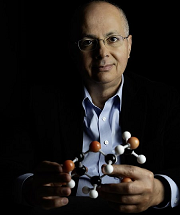
Relatore: Prof. Omar Yaghi,Professor of Materials Science and Engineering, University of California, Berkeley - Premio Nobel per la Chimica 2025
Abstract
The clean air, clean energy, and clean water challenges facing our planet today impact our health, wealth, happiness, and future. These three stresses present difficult science and engineering problems requiring, among many aspects, the selective capture of small molecules (e.g. hydrogen, methane, carbon dioxide, and water). Our ability to capture, store, manipulate, and harness the power of these molecules in an efficient and economical manner is paramount to our success in building a sustainable future. The emerging field of reticular chemistry has yielded extensive classes of ultra-porous metal-organic frameworks and covalent organic frameworks. The flexibility with which these materials can be made, modified, and scaled bodes well for their integration into devices and providing robust solutions to these challenges. In this presentation, I will highlight how reticular chemistry has led us to make frameworks for carbon capture from air and flue gas, as well as for harvesting water from air to produce drinking water in various parts of the world regardless of temperature and humidity levels. Our efforts in taking this technology from the laboratory to the field including the design and engineering of prototypes and applying AI tools to speed up discovery will be discussed and the results presented.
Biografia
Professor Omar Yaghi was awarded the Nobel Prize in Chemistry in 2025. He is widely known for pioneering a new field of chemistry, Reticular Chemistry, which he defines as 'stitching molecular building blocks into crystalline framework structures by strong bonds'. The outcome of this chemistry has been metal-organic frameworks (MOFs) and covalent organic frameworks (COFs). These materials have the highest surface areas known to date, making them useful for hydrogen and methane storage, carbon capture and conversion, water harvesting from desert air, catalysis, and healthcare. The chemistry approach he developed has led to an exponential growth in the creation of new materials. He has published over 300 peer-reviewed articles on MOFs and COFs, which have received a total of more than 250,000 citations.
Yaghi is an elected member of the U.S. National Academy of Sciences (2019) and the German National Academy of Sciences Leopoldina (2022). He has also been honored with many awards, including the Sacconi Medal of the Italian Chemical Society (2004), Materials Research Society Medal (2007), American Chemical Society Award in the Chemistry of Materials (2009), Royal Society of Chemistry Centenary Prize (2010), King Faisal International Prize in Science (2015), Albert Einstein World Award of Science (2017), BBVA Foundation Frontiers of Knowledge Award in Basic Sciences (2017), Wolf Prize in Chemistry (2018), Eni Award for Excellence in Energy (2018), Gregori Aminoff Prize by the Royal Swedish Academy of Sciences (2019), August-Wilhelm-von-Hofmann-Denkmünze of the German Chemical Society (2020), Royal Society of Chemistry Sustainable Water Award (2020), VinFuture Prize for Emerging Science and Technology (2021), Wilhelm Exner Medal (2023), Fiat Lux Award-UC Berkeley (2024), Solvay Prize (2024), Tang Prize (2024), and Balzan Prize (2024).

Relatore: Prof. Laura Gagliardi, Department of Chemistry, Pritzker School of Molecular Engineering, The University of Chicago
Abstract
Theory, computation, and machine intelligence, working in synergy with experiment, accelerate the discovery of metal–organic frameworks (MOFs) and covalent organic frameworks (COFs). I will first highlight our integrated computational and experimental study of catalytic MOFs, where post-synthetic modification introduced metal–sulfur active sites.[1] Quantum chemical calculations elucidated how sulfur incorporation modulates the electronic structure and catalytic reactivity of the frameworks. These insights provided a mechanistic understanding of hydrogenation catalysis and guided the design of MOFs with tunable properties.
I will then discuss our computational–experimental advances in COFs for CO2 adsorption. Modeling plays a central role in elucidating the structure–property relationships governing adsorption capacity and selectivity. By integrating density functional theory (DFT) and classical simulations with experiment, we identified the key structural features that enable COF-999-NH2 to act as a high-performance precursor to COF-999.[2] Subsequent molecular dynamics simulations based on machine-learned interatomic potentials trained on DFT illustrate how the polymeric amine architecture creates confined adsorption pockets that preferentially bind CO2. The aim of these simulations is to understand how to maximize CO2 uptake by linker design.
[1] H. Xie, M. A. Khoshooei, M. Mandal, S. M. Vornholt, J. Hofmann, L. M. Tufaro, K. O. Kirlikovali, D. A. Grimes, S. Lee, S. Su, S. Reischauer, D. Sengupta, K. Fahy, K. Ma, X. Wang, F. Sha, W. Gong, Y. Che, J. G. Vitillo, J. S. Anderson, J. M. Notestein, K. W. Chapman, L. Gagliardi, and O. K. Farha, Introducing Metal–Sulfur Active Sites in Metal–Organic Frameworks Via Post-Synthetic Modification for Hydrogenation Catalysis, Nature Chemistry, 2025, 17, 1514–1523.
[2] H. Daglar, Z. Zhou, R. Zhu, P. Parihar, J. I. Siepmann, O. M. Yaghi, and L. Gagliardi, Discovery of Stacking Heterogeneity, Layer Buckling, and Residual Water in COF-999-NH2 and Implications on CO2 Capture, J. Am. Chem. Soc. 2026, 148, 1614–1622.
Biografia
Laura Gagliardi received her undergraduate degree and PhD degree in theoretical chemistry from the University of Bologna in 1997, and then spent two years at Cambridge University, in England, as a postdoctoral scholar. In 2005 she took an appointment as associate professor at the University of Geneva, in Switzerland. In 2009, she moved to the United States where she was a professor at the University of Minnesota. She is the Richard and Kathy Leventhal Professor at the University of Chicago with a joint appointment at the Department of Chemistry and the Pritzker School of Molecular Engineering. She has received many recognitions, including the Pauling Medal Award, Peter Debye Award in Physical Chemistry from the American Chemical Society in 2020; the Award in Theoretical Chemistry from the American Chemical Society in 2019, the Humboldt research award in 2018. Gagliardi is an Elected Member of the American Academy of Arts and Sciences (2020), the International Academy of Quantum Molecular Science (2019) and Academia Europaea (2018). She also serves as an Associate Editor for the Journal of the American Chemical Society.

Relatore: Prof. Hexiang Deng, College of Chemistry and Molecular Sciences, Wuhan University
Abstract
Metal-organic framework (MOF), with extremely high surface area and molecularly defined pore environment are highly desirable for gas uptake, separation and conversion. The pore size of MOF is usually in the micropore domain (< 2 nm). In this talk, I will present the design and synthesis of MOFs with pore size in mesopore regime (2-50 nm). The largest 3D pores achieved using topology design exhibits an internal diameter of 11.4 nm[1], breaking the pore size record of MOFs. I will also discuss fundamental questions, such as, is there any limit in the sculpturing of 3D space from molecules? and how large an area can one chemical bond support?[2] Expanding the pore size to mesopore regime allows the entering of larger guests, such as nanoparticles, drug molecules, proteins and nucleic acids. I will also show how mesopores in MOFs are used to align nanoparticles in 3D spaces leading to the creation of unique composite capable of overall CO2 conversion driven by light, with unprecedentedly high apparent quantum yield, 11.3%.[3] The marriage between reticular chemistry with nanoscience is likely result in new frontiers for material research. Last but not least, the critical role of AI is discussed, largely accelerating the development of reticular chemistry.[4]
[1] Extremely Large 3D Cages in Metal-Organic Frameworks for Nucleic Acid Extraction. G. Hu, Q. Liu, Y. Zhou, W. Yan, Y. Sun, S. Peng, C. Zhao, X. Zhou, H. Deng, J. Am. Chem. Soc., 2023, 145, 13181–13194.
[2] Space Exploration of Metal-Organic Frameworks in the Mesopore Regime. G. Hu, Q. Liu, H. Deng Acc. Chem. Res., 2025, 58, 1, 73–86.
[3] Filling Metal-Organic Framework Mesopores with TiO2 for CO2 Photoreduction. Z. Jiang, X. Xu, Y. Ma, H. S. Cho, D. Ding, C. Wang, J. Wu, P. Oleynikov, M. Jia, J. Cheng, Y. Zhou, O. Terasaki, T. Peng, L. Zan, H. Deng Nature, 2020, 586, 549-554.
[4] Discovery of highly fluorescent covalent organic frameworks through AI-assisted iterative experiment–learning cycles. L. Zhang, J. Du, Z. Xie, L. Chen, W. Li, W. Geng, Y. Zhou, X, Ou, C. Gong, Y. Gao, S. He, C. Yan, C. Zhao, Y. Jiao, S. Yang, B. Huang, J. W. Y. Lam, J. Qian, J. Jiang, B. Z. Tang and H. Deng Nat. Chem., 2025, 17, 1645–1654.
Biografia
Professor at the College of Chemistry and Molecular Sciences at Wuhan University. He also serves as the director of International Affair Office at Wuhan University.
Prof. Deng received B.S. from Fudan University in 2007 guided by Dongyuan Zhao, and Ph.D. in 2011 from the UCLA mentored by Omar Yaghi. His group focuses on the design of porous crystalline materials including MOFs and COFs, and the correlation between the microenvironment of pores and their macroscopic properties. He studied the precise inclusion of DNA, RNA, proteins and semiconductor nanoparticles into the pores of MOFs, publishing more than 50 papers in Nature, Nat. Chem., Chem, JACS, Angew. Chem. Int. ed. He received the inaugurating "Rising Star Award" by the Chinese Zeolite Association in 2017, and the Talent Young Scientists Fund by NSFC in 2020.